DevOps was created to make software development faster and smoother. But as systems grow more complex, it’s becoming impossible for humans to manage everything manually. There are too many logs, servers, and microservices to monitor. That’s where AI-Augmented DevOps, often called AIOps, comes in.
AIOps uses artificial intelligence (AI) and machine learning (ML) to detect unusual behavior, predict failures, fix issues automatically, and optimize development pipelines. It’s the next step beyond automation — it’s about making systems intelligent enough to adapt and learn.
From Basic Automation to Smart Operations
Traditional DevOps automation is rule-based: “if X happens, do Y.” But AI doesn’t just follow rules — it learns from data and past incidents. Instead of simply reacting to failures, AIOps can spot early warning signs and take preventive action.
Imagine your deployment pipeline having a built-in AI assistant. When performance drops, it doesn’t just send an alert — it finds the cause, decides whether to roll back the deployment, and can even apply fixes automatically. This is the core idea behind emerging frameworks like Copilot4DevOps, where intelligent agents are embedded inside CI/CD pipelines to make real-time decisions.

How AI Improves DevOps
AI is already transforming DevOps in several powerful ways:
- Anomaly Detection
The system learns what normal behavior looks like and quickly spots anything unusual — before users notice. - Failure Prediction
Machine learning models analyze patterns and predict which components might fail next. - Auto-Remediation
AI can trigger automated fixes based on known solutions or past responses to similar issues. - Pipeline Optimization
It identifies slow build stages, unreliable tests, and unnecessary tasks, helping teams speed up delivery.
These improvements don’t just save time — they improve stability and make systems more reliable with each release.
Smarter Decision Points in CI/CD
A growing trend in research and engineering is embedding AI decision points directly into CI/CD pipelines. These are checkpoints where an AI agent evaluates what should happen next.
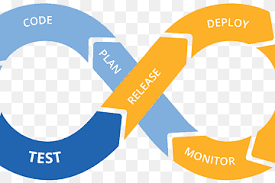
If a build fails, the AI can decide:
- Should it retry automatically?
- Should it roll back the last change?
- Should it temporarily disable a risky feature?
This kind of intelligent pipeline behaves less like a static script and more like a living system — one that learns, adapts, and improves with every deployment.
The Real Benefits
When applied correctly, AIOps can deliver major results:
- Faster detection and recovery from incidents
- Reduced alert noise, so teams aren’t drowning in false warnings
- Smarter resource management, cutting unnecessary cloud costs
- Higher release confidence through predictive insights
In short, AIOps helps DevOps teams focus on building great products instead of constantly reacting to outages and system issues.
The Risks You Can’t Ignore
AI brings power, but also danger. Models can make wrong assumptions, misread signals, or trigger the wrong responses. An AI that acts without proper checks could roll back healthy deployments or hide critical issues.
That’s why trust, transparency, and human oversight are essential. AI should assist humans — not replace them. Teams must ensure that AI actions are logged, decisions are explainable, and models are retrained regularly to stay accurate.
The Bottom Line
AIOps isn’t a passing trend. It’s the logical next step for modern DevOps teams dealing with high complexity and large-scale systems. But it’s not a “set it and forget it” solution.
Used wisely, AIOps can make your pipelines smarter, your systems more stable, and your teams more efficient. Used blindly, it can cause chaos faster than any manual error.
The future of DevOps is intelligent, adaptive, and data-driven — but it still needs humans in control.
AI can enhance automation, but judgment and accountability must stay with people. That’s how you make DevOps truly evolve — not just faster, but smarter.