Passing PSM feels good. You studied the Scrum Guide, answered scenario questions, and got the certificate. Congratulations you proved you understand the theory of Scrum.
Now here’s the uncomfortable truth:
That alone does not make you job-ready anymore.
If you cleared PSM without understanding how AI changes Scrum, Agile delivery, and team dynamics, you are already behind the market whether you like it or not.
The Certification Lie We Don’t Talk About
PSM validates knowledge.
Jobs demand impact.
Hiring managers are not asking:
- “Do you know the Scrum Guide?”
They are asking: - “Can you help teams deliver faster, better, and with less chaos?”
AI has changed what “help” looks like.
A Scrum Master who relies only on manual facilitation, gut-feel insights, and ceremony enforcement looks outdated in an environment where AI can already provide visibility, prediction, and pattern detection.
What PSM Teaches And What It Doesn’t
PSM teaches you:
- Scrum events and accountabilities
- Empiricism and transparency
- Roles and responsibilities
- Theoretical anti-patterns

PSM does not teach you:
- How to analyze flow metrics at scale
- How to detect systemic bottlenecks early
- How to use data to challenge leadership decisions
- How to reduce meetings using automation
- How AI can replace low-value Scrum Master tasks
That gap is now career-critical.
What AI Already Does Better Than Many PSMs
Let’s be brutally honest.
AI can already:
- Track progress continuously without daily stand-ups
- Detect blocked work faster than humans
- Analyze sprint spillover causes objectively
- Surface recurring impediments using historical data
- Predict delivery risks before humans “sense” them
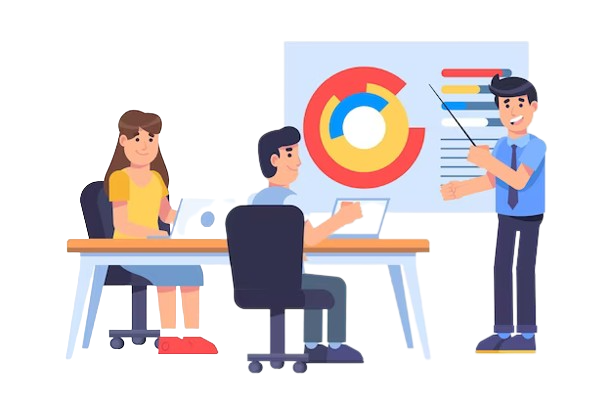
If your Scrum Master value is limited to:
- Running ceremonies
- Asking scripted retrospective questions
- Updating Jira dashboards
- Reporting status
You are competing with software and losing.
The New Baseline for “Job-Ready” Scrum Masters
Being job-ready in 2025+ means PSM + AI literacy, not PSM alone.
A job-ready Scrum Master must be able to:
- Use AI insights to coach teams
- Reduce ceremony load, not increase it
- Replace status meetings with continuous visibility
- Back coaching conversations with real data
- Focus on outcomes instead of ritual compliance
AI doesn’t replace Scrum Masters.
It replaces weak interpretations of the role.
Why Recruiters Don’t Care About Your PSM Score
Here’s what hiring managers actually see:
Two candidates:
- Both PSM certified
- One uses AI to identify flow issues, risk patterns, and team bottlenecks
- The other “facilitates really well”
Guess who gets hired?
PSM without AI skills looks like:
“Understands Scrum, but can’t operate in modern delivery environments.”
That’s not a red flag but it’s not a green one either.
This Is Not About Tools It’s About Thinking
This isn’t about memorizing AI tools.
It’s about understanding:
- How AI changes feedback loops
- How automation shifts transparency
- How data replaces opinion
- How Scrum Masters move from facilitators to system thinkers
If you don’t understand that shift, your PSM knowledge stays theoretical.
Conclusion
Clearing PSM proves you can learn Scrum.
Being job-ready means proving you can apply Scrum in an AI-augmented world.
If you cleared PSM without learning:
- How AI affects Agile roles
- How AI reduces low-value ceremonies
- How AI strengthens empiricism
Then no, you’re not job-ready yet.
The good news?
This is fixable.
But pretending PSM alone is enough?
That’s how Scrum Masters become obsolete quietly.